Step 1
How lists are organized — scan in 30 seconds
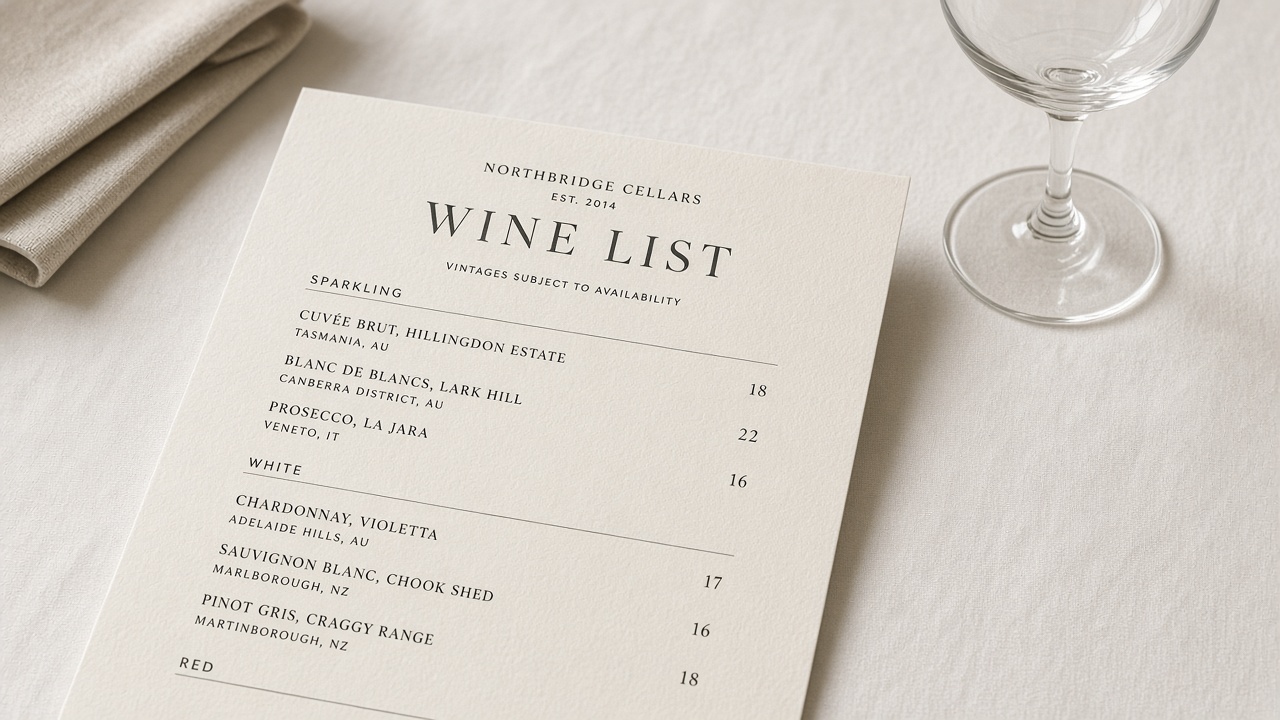
Most lists group by region, grape, or style (sparkling / white / red / sweet). Find the organizing axis first. Then find your price band. Ignore the trophy page until you care.
Step 2
Phrasebook that actually helps
- Body — light / medium / full (weight on the palate)
- Acid — brightness / snap; high acid cuts fat
- Tannin — grip/dryness on reds; soft vs firm
- Oak — vanilla/toast vs stainless “clean”
- Dry — not sweet (ask if residual sugar matters to you)
- Old-world / new-world — rough shorthand for earth vs fruit-forward; use lightly
Ten useful words beat fifty memorized regions you will mispronounce under pressure.
Step 3
Price bands — where value usually hides
Second-least-expensive is a cliché for a reason — and so is ignoring the middle of a well-built list. Set a number before you open the book. Value often sits one step off the famous names, not at the floor and not at the trophy shelf.
Step 4
Pairing without dogma
Sauce, fat, and salt matter more than “red with meat” slogans. Rich sauce → acid or bubbles. Heavy tannin + delicate fish is a fight. If the table is mixed, choose versatile: lighter red, textured white, or sparkling.
Step 5
One sentence to the sommelier
“We’re around $X, eating [dish], and I’d love something [light/earthy/not too oaky] — what would you pour?”
Budget + dish + one preference. That is enough. You are hiring their list knowledge, not auditioning.
Step 6
Safe defaults — and when to care
When you don’t care: house sparkling by the glass, a dry Riesling or Grüner, a soft Pinot/Gamay-style red. When to care: anniversary bottle, wine-focused restaurant, or a list you actually want to learn from.
Step 7
Anti-bluff mistakes
Don’t
- Pretend you’ve had the bottle
- Correct the sommelier to sound smart
- Order the famous label just to be seen ordering it
- Skip the budget sentence and hope they guess
Done
You’re done when…
Done when
- You can scan list structure in ~30 seconds
- You can use ~10 useful phrases without theater
- You can pick a bottle in budget
- You can ask one smart question